
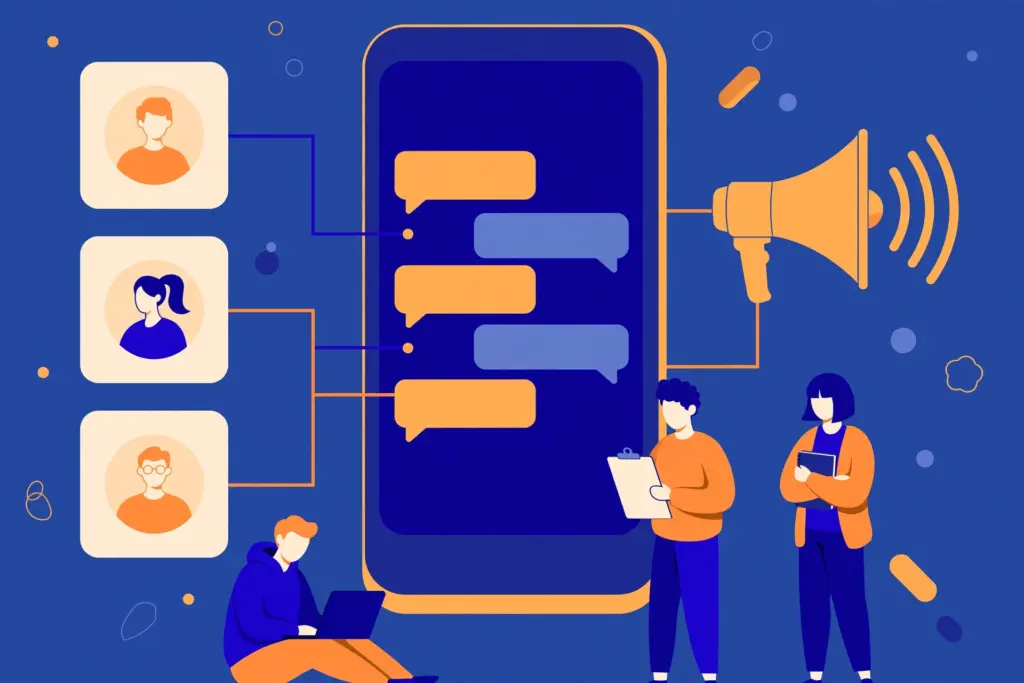
WhatsApp CRM software is a tool that connects a business’s WhatsApp to a CRM system. Every customer chat — a price enquiry, an order update, a complaint — is automatically saved as a contact or lead record, so no conversation is lost on one employee’s phone.
Table of Contents
In India, this matters more than anywhere else. Customers here prefer WhatsApp over email. A coaching institute gets admission enquiries on WhatsApp. A saree seller takes orders on WhatsApp. A clinic books appointments on WhatsApp. WhatsApp CRM software takes all those chats and turns them into organised customer records that a whole team can work on together.
How WhatsApp CRM software works
The process is simple. There are four steps between a customer’s message and a tracked lead in your CRM.
1. The business connects WhatsApp to the CRM. Businesses do not use the normal WhatsApp app for this. They connect through the WhatsApp Business API (the official way businesses use WhatsApp at scale) to a CRM platform. Once connected, every incoming and outgoing message flows through the CRM.
2. The whole team shares one inbox. Normally, customer chats sit on one salesperson’s phone. If that person is on leave, nobody can reply. With WhatsApp CRM software, all chats appear in one shared inbox on the computer. Any team member can open a chat, see the full history, and reply. Chats can be assigned to specific people, just like support tickets.
3. Chats become contact records automatically. When a new number messages the business, the software creates a contact. The name, phone number, and every message are stored. If the same person messages again next month, the team sees the entire history — what they asked, what they bought, what went wrong. Nothing starts from zero.
4. Labels, broadcasts and follow-ups run from the CRM. The team can tag chats (“new enquiry”, “payment pending”, “repeat buyer”), send bulk messages to selected groups (festival offers, fee reminders), and set follow-up reminders. A lead who asked for a price on Monday but did not reply gets an automatic nudge on Thursday.
Key features of WhatsApp CRM software
Almost every WhatsApp CRM tool includes the same core features:
| Feature | What it does in simple words |
|---|---|
| Shared team inbox | All WhatsApp chats in one place; any team member can reply |
| Broadcast campaigns | Send one message (offers, reminders, updates) to many selected customers at once |
| Chatbots and auto-replies | Automatic answers to common questions like price, timing and address — even at night |
| Labels and segmentation | Tag chats by type or stage, so the team can find “all unpaid orders” in seconds |
| Order and payment follow-ups | Send payment links, order confirmations and delivery updates inside the chat |
| Reports and dashboards | See how many chats came in, how fast the team replied, and how many led to sales |
These are WhatsApp-specific additions to the standard features of CRM — contact records, pipelines and reports — that every CRM shares.
Who needs WhatsApp CRM software
Any business whose customers talk to them on WhatsApp. In India, that is a very long list. The most common users are:
- D2C brands and online sellers. Enquiries, order confirmations, shipping updates and COD follow-ups all happen on WhatsApp. The CRM keeps every buyer organised.
- Coaching institutes and course sellers. Admission enquiries, fee reminders, batch timings and demo-class invites run on WhatsApp. Labels like “demo attended” and “fee pending” keep counsellors on track.
- Real-estate agents and builders. Site-visit requests, brochure sharing and price negotiations happen over chat. The CRM stops hot leads from going cold when an agent is busy.
- Clinics, salons and service businesses. Appointment booking, reminders and post-visit follow-ups on WhatsApp. Auto-replies handle “what are your timings?” at midnight.
- Small B2B teams. Quotations, catalogues and payment follow-ups with dealers and distributors — all in one inbox instead of five salespeople’s phones.
WhatsApp CRM vs regular CRM — is there a difference?
The CRM idea is the same. CRM always stands for Customer Relationship Management — one organised record per customer. WhatsApp CRM is simply a CRM whose main channel is WhatsApp instead of email or phone calls.
In practice the difference is where the work happens. In a regular CRM, the salesperson logs calls and emails manually. In a WhatsApp CRM, the chats save themselves — the conversation is the record. For businesses in India, where the customer lives on WhatsApp, this removes the biggest reason CRMs fail: salespeople who never update them.
If you want the general concept first, read what is CRM software before deciding whether you need the WhatsApp version.
Options: dedicated tools vs built-in features
There are two ways to get WhatsApp CRM.
Dedicated WhatsApp CRM tools are built around WhatsApp first. Tools like Interakt and Wati are popular with Indian small businesses — they offer the shared inbox, broadcasts, chatbots and labels as their core product, and they are priced for small teams. These suit businesses where WhatsApp is the main (or only) sales channel.
WhatsApp features inside a full CRM are the other route. Platforms like Zoho CRM and Freshsales include WhatsApp messaging as one channel among many — alongside email, calls and the sales pipeline. This suits teams that need the full sales process (quotations, targets, reports) with WhatsApp added on, not WhatsApp alone.
Which one fits depends on one question: is WhatsApp your whole business, or one part of it? A boutique selling only on WhatsApp does well with a dedicated tool. A company with a sales team, targets and multiple channels usually needs the full CRM with WhatsApp built in. More tool names and categories are on the CRM examples page. For how these fit into the bigger picture, see the types of CRM.
What is WhatsApp CRM software?
WhatsApp CRM software is a tool that connects a business’s WhatsApp to a CRM system via the WhatsApp Business API. Every customer chat — price enquiries, order updates, complaints — is automatically saved as a contact or lead record, so no conversation is lost on one employee’s phone.
How does WhatsApp CRM work?
The business connects WhatsApp to the CRM through the official WhatsApp Business API. All chats appear in one shared team inbox, new numbers automatically become contact records with full message history, and the team can use labels, broadcasts, chatbots and follow-up reminders from the CRM.
Do I need the WhatsApp Business API for WhatsApp CRM?
Yes, for any serious use. The API is the official way businesses use WhatsApp at scale — the normal WhatsApp app or WhatsApp Business app cannot give a whole team a shared inbox with automatic CRM records. WhatsApp CRM tools connect through this API.
Should I choose a dedicated WhatsApp CRM or a full CRM with WhatsApp features?
It depends on one question: is WhatsApp your whole business, or one part of it? A boutique selling only on WhatsApp does well with a dedicated tool like Interakt or Wati. A company with a sales team, targets and multiple channels usually needs a full CRM (like Zoho CRM or Freshsales) with WhatsApp built in.