
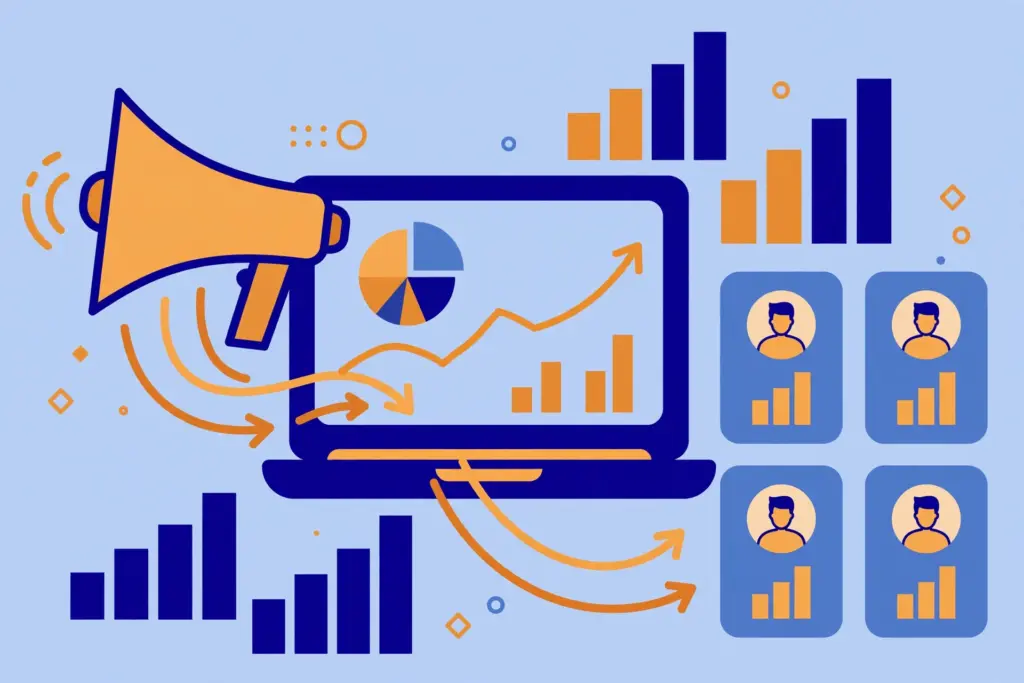
In digital marketing, the CRM full form is Customer Relationship Management. It is the system that connects ad clicks to actual customers — tracking who clicked your ad, who filled the form, who bought, and which campaign made it happen.
That is the one-line answer. If you are a student, a digital marketing job seeker, or a business owner running ads yourself, this page explains what CRM means in digital marketing, how marketers use it every day, and the terms and tools you will come across.
Table of Contents
What CRM means for a digital marketer
A digital marketer spends money on Google ads, Instagram ads, email campaigns, and WhatsApp broadcasts. Without a CRM, all that data sits in separate places — ad platforms show clicks, the website shows form fills, the sales team keeps its own Excel sheet. Nobody knows which ad actually brought a paying customer.
A CRM fixes this by joining the two ends together:
- The marketing end: which ad, keyword, or campaign brought the person in
- The sales end: whether that person became a customer, and how much they spent
When both ends live in one system, the marketer can answer the only question that matters: how much revenue did each campaign produce? This is why most digital marketing job descriptions in India now list CRM knowledge as a requirement.
The main guide on CRM full form in marketing covers the broader picture; this page focuses on the digital side — ads, clicks, and online campaigns.
How digital marketers use CRM every day
1. Campaign and UTM tagging
Every link in an ad, email, or social post carries tracking tags (called UTM parameters). When someone clicks and fills a form, the CRM records exactly which campaign, ad set, and keyword brought them. No more guessing whether the customer came from Google or Instagram.
2. Lead capture from ads
When someone fills a lead form on a Facebook ad or a website landing page, the details go straight into the CRM — name, phone, city, and which ad they came from. The lead is assigned to a salesperson automatically, within minutes. Speed matters: leads contacted within an hour are far more likely to convert than leads contacted the next day.
3. Email and WhatsApp nurturing
Most leads do not buy immediately. The CRM sends them a planned sequence of follow-ups — a welcome email on day one, a WhatsApp message with customer reviews on day three, a festival discount on day seven. This is called nurturing, and it runs automatically once set up. In India, WhatsApp nurturing is especially powerful because open rates are far higher than email.
4. ROAS reporting — which campaign made money
ROAS means Return on Ad Spend: how many rupees you earned for every rupee spent on ads. The CRM connects each closed deal back to its original campaign, so the marketer sees a simple report: Campaign A spent ₹10,000 and brought ₹80,000 in sales; Campaign B spent ₹10,000 and brought ₹5,000. Budget moves from B to A. This single report is what separates professional digital marketers from beginners.
Digital marketing terms you will hear in a CRM
| Term | Simple meaning |
|---|---|
| Lead | A person who showed interest — filled a form, clicked an ad, asked for a price — but has not bought yet |
| Conversion | The moment a lead takes the action you wanted: a purchase, a signup, a paid booking |
| Attribution | Figuring out which ad or campaign deserves the credit for a sale |
| Retargeting | Showing ads again to people who visited your site or watched your video but did not buy |
CRM tools digital marketers use
| CRM tool | Why digital marketers like it | Starting cost |
|---|---|---|
| HubSpot CRM | Free plan includes ad tracking, email marketing, and landing pages — built for marketers | Free plan available |
| Zoho CRM | Low cost, integrates with Google Ads and Zoho’s own marketing apps, popular in India | Free plan for 3 users |
Both tools let you connect ad accounts directly, so leads flow in automatically. For students learning digital marketing, starting with a free HubSpot account is the fastest way to understand how CRM and ads work together. More tools are listed on our page of examples of CRM software.
Do ad platforms replace a CRM?
No — they do different jobs. Google Ads and Meta Ads Manager tell you what happened before the click: impressions, clicks, cost per click. A CRM tells you what happened after: which clicks became leads, which leads became customers, and how much revenue each campaign produced.
Smart marketers use both together. The ad platform optimises for cheaper clicks; the CRM tells you which of those clicks were worth paying for. Without the CRM half, you are optimising for the wrong thing — cheap traffic instead of profitable customers.
Why CRM matters more in digital marketing than anywhere else
Digital marketing is measurable — every click has a cost. That makes CRM more important here than in any other field, because the CRM is what turns raw ad data into business answers. A marketer without a CRM is flying blind: they know the cost of every click but the value of none.
With a CRM, the marketer can show the business owner exactly what each rupee earned. That is why Customer Relationship Management skills — and specifically CRM-plus-ads skills — are among the most employable combinations in Indian digital marketing today. The benefits of CRM compound fastest when every campaign is tracked.
FAQs
What is the full form of CRM in digital marketing?
In digital marketing, CRM stands for Customer Relationship Management. It is the system that connects ad clicks to actual customers — tracking who clicked an ad, who filled a form, who bought, and which campaign made the sale happen.
Why do digital marketers need a CRM?
Digital marketers need a CRM to connect ad spend to revenue. Without one, clicks live in ad platforms, leads live on the website, and sales live in spreadsheets — so nobody knows which campaign brought paying customers. A CRM joins both ends and shows how much revenue each campaign produced.
What is ROAS and how does a CRM help track it?
ROAS means Return on Ad Spend — how many rupees you earned for every rupee spent on ads. A CRM connects each closed deal back to its original campaign, so marketers can see exactly which campaigns made money and move budget to the winners.
Which CRM tools are popular with digital marketers?
HubSpot CRM is popular because its free plan includes ad tracking, email marketing, and landing pages. Zoho CRM is widely used in India for its low cost and Google Ads integration. Both connect ad accounts directly so leads flow in automatically.