
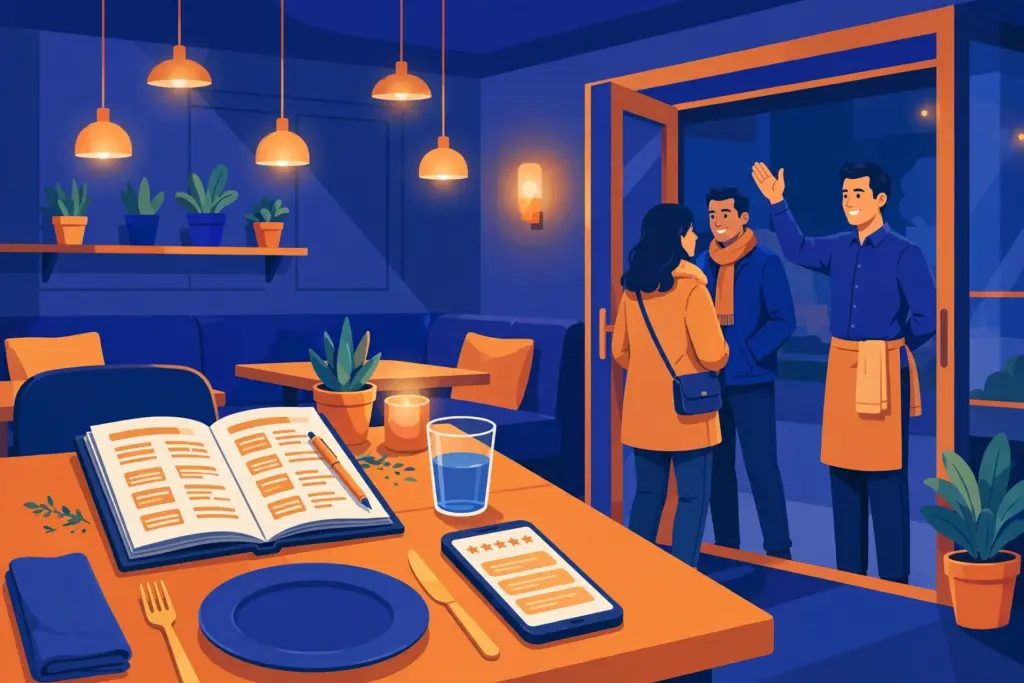
Restaurant CRM software is software that helps restaurants remember their guests — their visits, preferences and birthdays — and bring them back with the right offers. It turns one-time visitors into regulars. If you run a restaurant, cafe or cloud kitchen in India, this page explains what the software does and how restaurants actually use it.
Table of Contents
What it does in simple words
CRM stands for Customer Relationship Management. In a restaurant, the “relationship” is with every guest who walks in or orders online. The software keeps one record per guest: name, phone number, how many times they visited, what they usually order, when their birthday is, and whether they left a review. New to the term? See our guide to the CRM full form for the complete definition.
Think of a regular guest. Without software, remembering that Mr. Sharma likes his coffee without sugar and his daughter’s birthday is next month depends on one waiter’s memory. With restaurant CRM software, every staff member sees the same guest profile — so the guest feels recognised every single time. If you are new to the category, our guide on what is CRM software explains the basics in plain English.
How restaurants use it every day
1. Reservation book. Table bookings are stored with the guest’s name and history. When a repeat guest books, the staff already knows their preferences before they arrive.
2. Order history. The software records what each guest ordered on past visits. This lets the restaurant suggest dishes the guest is likely to enjoy — and avoid suggesting something they disliked.
3. Loyalty points. Guests earn points on every bill and redeem them later. The software tracks the points automatically, so the staff never has to do manual calculations at the billing counter.
4. Birthday and anniversary offers. The software knows each guest’s special dates and sends a personalised offer — a free dessert, a discount, a table reservation invite. These messages bring guests back on days they would otherwise eat elsewhere.
5. Feedback collection. After a visit, the guest gets a short feedback message. Happy guests are asked to leave a Google review; unhappy guests are handled privately before they post a bad rating.
6. Online review follow-up. Reviews on Google, Zomato and Swiggy are tracked in one place. The owner sees new reviews as they come and can respond quickly — which matters, because most diners check ratings before choosing a restaurant.
Key features of restaurant CRM software
The standard features of CRM look a little different in a restaurant. Here is what matters:
| Feature | What it does in a restaurant |
|---|---|
| Guest profiles | One record per guest with visits, preferences, birthdays and spend history |
| Table reservations | Booking diary linked to guest profiles, so regulars are recognised on arrival |
| Loyalty program | Points on every bill, automatic tracking and redemption at the counter |
| Campaign offers | Festival, weekend and slow-day offers sent by SMS or WhatsApp to the right guests |
| Feedback and reviews | Post-visit feedback collection plus Google, Zomato and Swiggy review tracking |
| Online order sync | Orders from food delivery apps linked to guest profiles, so online customers are remembered too |
A small cafe may only need guest profiles and feedback. A multi-outlet chain will use all six, plus reports comparing which outlet keeps guests coming back. Browse CRM software examples to see which tools fit a restaurant’s needs.
Who needs restaurant CRM software?
Dine-in restaurants. Fine dining and family restaurants live on repeat guests. Remembering preferences and special occasions is the whole business.
Cafes and bakeries. High footfall, quick visits — loyalty points and WhatsApp offers keep people choosing your cafe over the one next door.
Cloud kitchens. No walk-in guests at all, so every customer relationship is digital. Order history and re-order offers are the main growth tools.
Chains and franchises. The head office needs to see which outlet has the most repeat guests, which offers work, and where reviews are slipping — all in one dashboard.
The common thread: any food business where the same customer can come back again. A highway dhaba serving one-time travellers gains little; a neighbourhood restaurant gains everything. That repeat business is where the benefits of CRM show up fastest — more visits per guest, higher bills, and better reviews.
What to look for when choosing one
You do not need the most expensive tool — you need the one your staff will actually use. Check four things before you buy:
Ease of use. If the billing counter staff cannot add a guest in under a minute, they will stop doing it. Ask for a trial and watch your own team use it.
WhatsApp integration. In India, offers and feedback requests work best on WhatsApp. A tool that sends campaigns only by email will underperform.
Review tracking. Google and Zomato ratings decide where new customers eat. The tool should show new reviews and let you reply quickly.
Reports that matter. Repeat-guest percentage, offer redemption rate, and outlet comparison for chains. Skip tools that only show vanity numbers.
Start with a free trial during a normal week — not a festival week — so you see how it performs on ordinary days. The right tool is the one that quietly fills tables on slow Tuesdays.
FAQs
What is restaurant CRM software?
Restaurant CRM software helps restaurants remember their guests — their visits, preferences and birthdays — and bring them back with the right offers. It keeps one record per guest and turns one-time visitors into regulars.
How do restaurants use CRM software every day?
Restaurants use it for table reservations linked to guest profiles, order history tracking, loyalty points, birthday and anniversary offers, post-visit feedback collection, and monitoring online reviews on Google, Zomato and Swiggy.
Which restaurants need CRM software?
Dine-in restaurants, cafes and bakeries, cloud kitchens, and chains or franchises benefit most — any food business where the same customer can come back again. A highway dhaba serving one-time travellers gains little; a neighbourhood restaurant gains everything.
What should I check before buying restaurant CRM software?
Check four things: ease of use (staff should add a guest in under a minute), WhatsApp integration for offers and feedback, review tracking for Google and Zomato, and reports that matter — repeat-guest percentage, offer redemption rate, and outlet comparison for chains.